

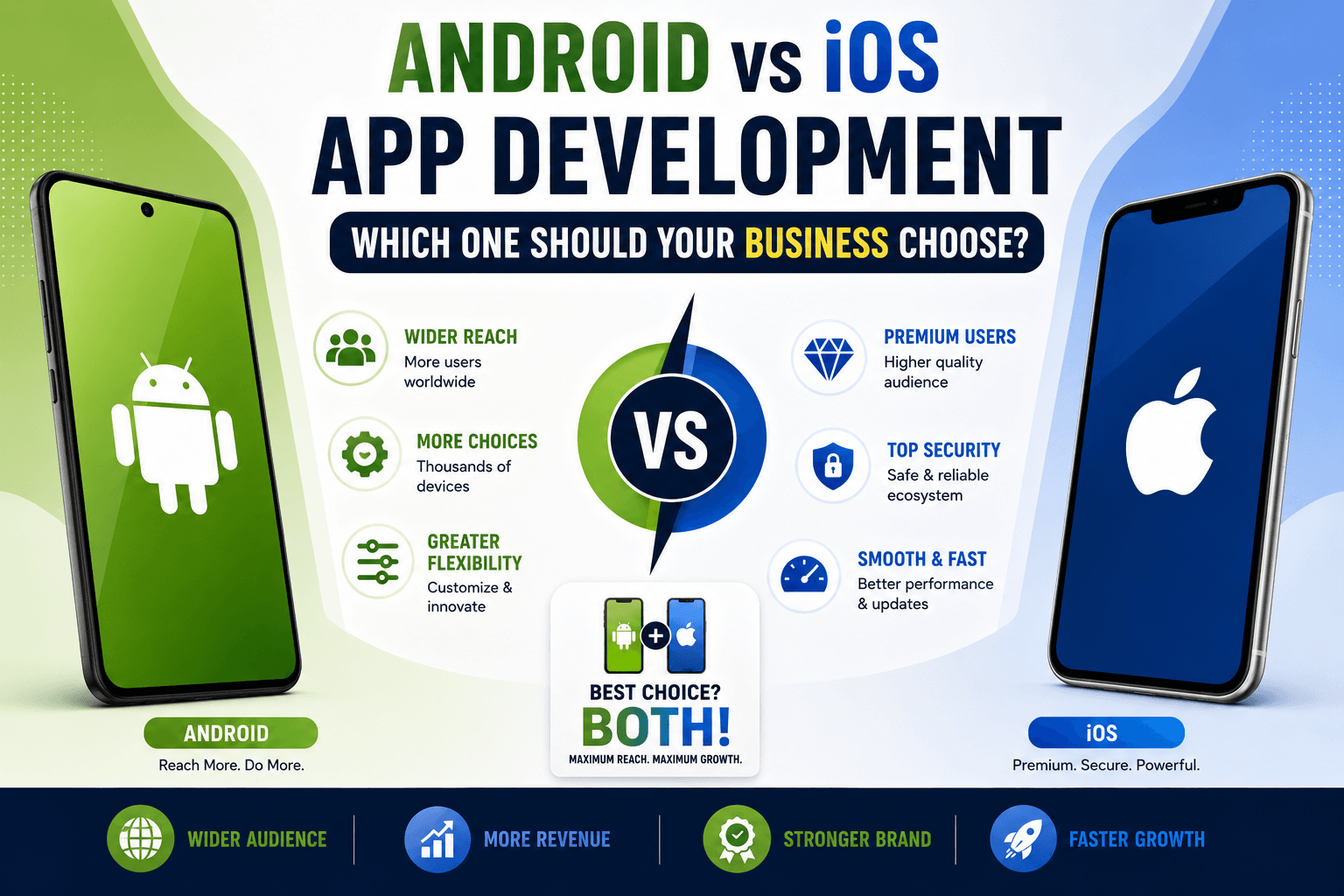
In today’s mobile-first world, having a business app is one of the smartest investments you can make. But one common question every business owner faces is:
Should you choose Android app development or iOS app development?
Both platforms offer unique advantages, and the right choice depends on your business goals, target audience, budget, and market strategy.
In this guide, we’ll compare Android and iOS app development to help you decide which platform is best for your business in 2026.
Android app development involves creating applications for Android devices such as Samsung, Xiaomi, OnePlus, Vivo, Oppo, and more.
Android apps are usually developed using:
Apps are published on the Google Play Store.
iOS app development focuses on building applications for Apple devices like:
iOS apps are commonly developed using:
Apps are published on the Apple App Store.
| Feature | Android | iOS |
|---|---|---|
| Market Share | Larger global audience | Premium user base |
| Devices | Many brands & screen sizes | Limited Apple devices |
| Development Cost | Usually lower | Slightly higher |
| App Approval | Faster publishing | Strict review process |
| Revenue Potential | More downloads | Higher user spending |
| Customization | Highly flexible | More controlled ecosystem |
| Security | Good security | Stronger security reputation |
| Updates | Slower device updates | Faster software updates |
Android dominates the global smartphone market, especially in countries like India, Brazil, Indonesia, and many developing regions.
If your goal is:
then Android is usually the better option.
iOS users are often concentrated in premium markets such as:
Apple users also tend to spend more on apps and subscriptions.
If your business targets premium customers, iOS may be the smarter choice.
Android development can sometimes require:
because Android devices come in many sizes and hardware configurations.
iOS apps are easier to optimize because Apple devices have limited screen sizes and hardware variations.
However:
can slightly increase development costs.
Studies consistently show that iOS users spend more money on:
If your business model relies heavily on paid services or premium subscriptions, iOS users often generate higher revenue.
Android, however, usually delivers:
Android apps generally get approved faster with fewer restrictions.
This allows:
Apple has a strict review process focused on:
Although approvals may take longer, iOS apps often gain more trust from users.
Apple’s ecosystem is tightly controlled, making iOS apps highly secure and stable.
Best for:
Android also offers strong security, but device fragmentation can create additional challenges.
Still, modern Android development frameworks provide excellent performance and protection.
✅ You want a larger audience
✅ Your budget is limited
✅ Your target users are in emerging markets
✅ You need faster market reach
✅ You target premium customers
✅ You focus on subscriptions or paid apps
✅ Your audience uses Apple devices
✅ You prioritize security & user experience
In 2026, many businesses choose cross-platform app development using technologies like:
This allows developers to create one app that works on both Android and iOS, saving:
Cross-platform development is ideal for startups and businesses wanting maximum reach.
There’s no universal winner between Android and iOS app development. The right platform depends on your:
If possible, launching on both platforms provides the best long-term growth opportunities.
A professional app development team can help you choose the right solution based on your business needs.



